Choose lash enhancement, visible liner, width, and placement deliberately
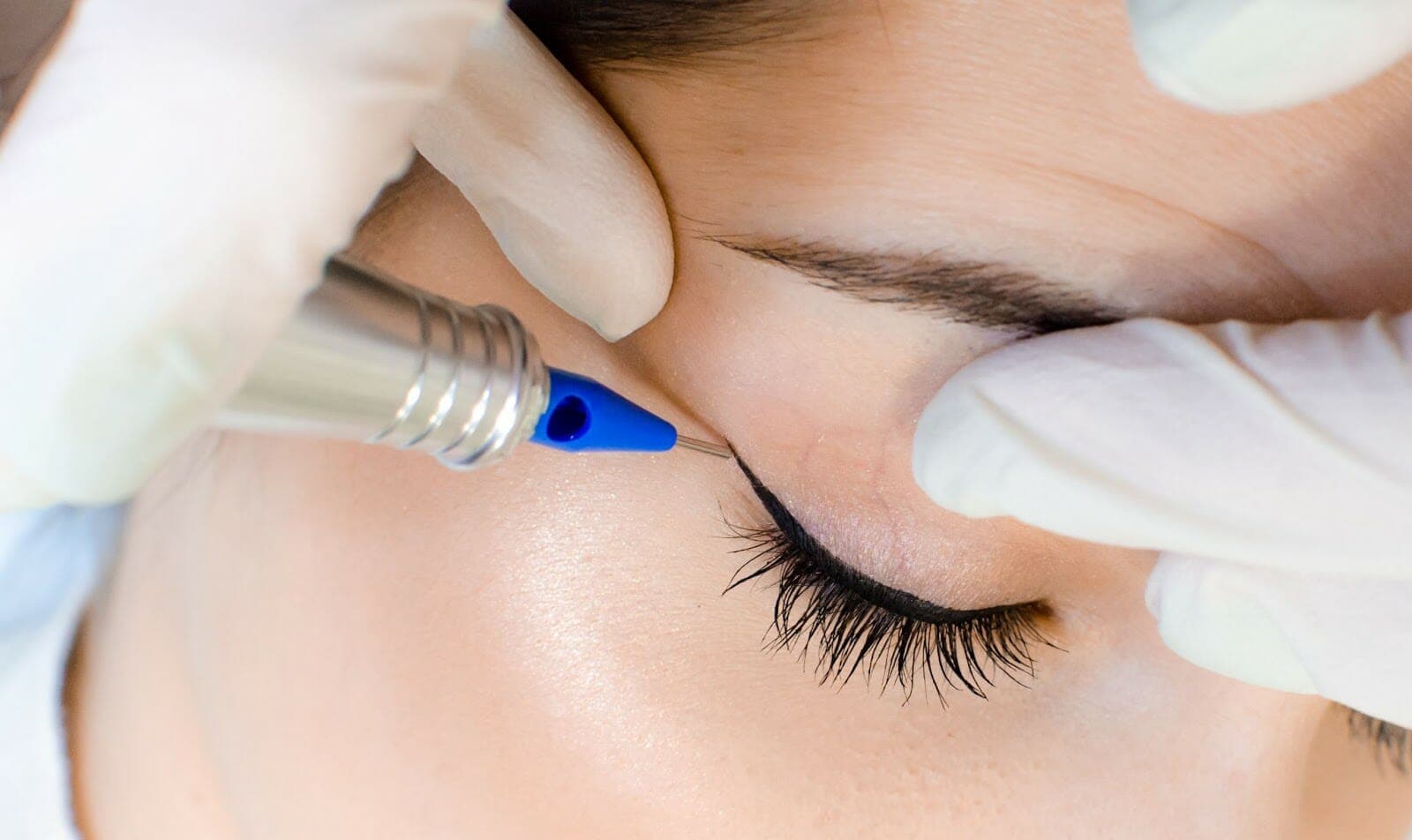
Permanent eyeliner can range from subtle pigment placed through the lash line to a more visible line above it. Those are different commitments, not merely different thickness settings. Ruth Swissa considers lid anatomy, natural lash density, eye shape, symmetry, color preference, and how the client normally wears makeup before a design is mapped.
A reference image can clarify whether the appeal comes from darkness at the lash roots, an extended outer shape, or a defined makeup effect. It cannot be transferred unchanged to another eyelid. The line must be evaluated with the eyes open and closed and with ordinary facial movement. Skin folds and changes in the lid over time also make restraint worth discussing before extending or widening pigment.
Fresh work commonly appears stronger than the later healed line, so initial intensity should not be used as the only design evidence. Healed portfolio examples are more useful when they show a comparable placement and clearly identify timing. Color and width should be approved before treatment with the understanding that healing and retention vary.
Discuss eye conditions, contact lenses, lash treatments, and prior tattooing
The eye area requires a careful history. Dry eye, irritation, infection, recent eye surgery, vision procedures, allergies, lid conditions, and changes that have not been evaluated may affect timing or require input from an eye-care professional. The tattoo consultation cannot diagnose those concerns, and active symptoms should not be minimized to keep an appointment date.
Contact lenses, lash extensions, growth serums, lash lifts, tinting, and eye makeup routines also belong in the conversation. Once Ruth knows when and how you use them, she can give procedure-specific preparation advice for those products and services. Prescription treatment changes remain with the prescribing clinician.
Existing eyeliner pigment must be visible at the assessment. Its location, depth, color, shape, and any prior removal influence what can be placed safely and attractively. Adding a wider or darker line may conceal less than expected and create a more permanent commitment. Correction, waiting, or declining additional work can be the sound recommendation.
Separate temporary swelling and fresh darkness from the healed line
The early eye-area appearance combines fresh pigment with a recently treated surface. Temporary swelling or tenderness can change how symmetry and width are perceived, while the line itself can look darker before settling. A day-one photograph therefore documents the procedure stage rather than the final result.
Care should follow the instructions supplied for that appointment. Products near the eyes, lens use, makeup, cleansing, and the timing of other lash services should not be improvised from a general permanent makeup routine. If something differs from what was described, use the contact method provided by the practice; urgent or medical eye symptoms require appropriate medical attention.
Later evaluation should occur when Ruth says the area is ready to judge. The review can look at healed color, lash-line continuity, balance between sides, and whether any refinement would support the original plan. More pigment is not automatic, particularly if the line already has adequate density or the skin needs more time.
Scheduling deserves the same care as design. Travel, professional photographs, and events can be difficult to combine with a visible early phase or limited follow-up access. When you are ready to discuss the lash line in person, start with the permanent eyeliner service to see how the consultation and process work.