
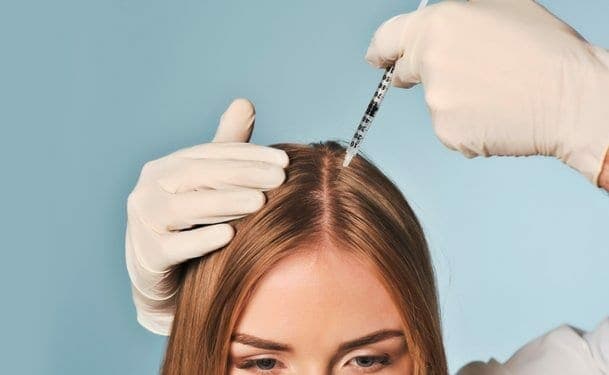
Identify the pattern and possible cause before choosing PRP
Hair loss can appear as shedding, patterned thinning, a widening part, distinct patches, or changes accompanied by scalp symptoms. Those presentations can have different causes. Medication, illness, nutrition, hormones, family history, and earlier treatment all belong in the initial review.
PRP uses components processed from the patient’s own blood, but that fact alone does not make everyone a candidate. A qualified clinician should evaluate the pattern, stability, and available evidence before recommending injections. New, sudden, painful, or unexplained loss may require diagnosis or another form of care first.
Early hair loss is not, by itself, a promise of better response or proof of candidacy. The responsible question is whether the identified pattern has a reasoned treatment plan and a way to measure response for the individual.
Ask how blood is processed, injected, and monitored
PRP commonly involves a blood draw followed by processing and scalp injections, but the actual system and preparation can differ. A consultation should identify what component is prepared, who performs each step, and how sterility and specimen handling are managed. Generic PRP language can hide meaningful differences.
Blood or platelet conditions, infection, medication, bleeding concerns, pregnancy status, and other medical factors may change candidacy. The clinician also needs to discuss comfort measures rather than promising that every person will feel no discomfort. If an anesthetic block is considered, its provider and risks require their own consent.
Ask how many visits are initially proposed, the spacing between assessments, total cost, and alternatives. A planned series should still allow the clinician to reconsider when the scalp, diagnosis, or response does not support continuing.
Use standardized photographs and clinical review to track change
Hair changes gradually, and day-to-day impressions are vulnerable to lighting, styling, part placement, and hair length. Standardized photographs should repeat the same angle, lighting, magnification, and parting. Clinical examination can add information that a photograph misses.
A follow-up should compare shedding, density pattern, scalp health, and any adverse response with the original goal. The review point needs enough time to observe hair-cycle change without guaranteeing growth or a particular density. If the pattern progresses, the clinician may revisit the diagnosis rather than simply adding procedures.
Confirm the current provider and service availability before booking, and expect clinical photographs to be used only with appropriate permission. The person practicing permanent makeup is not automatically the clinician responsible for PRP. Medical guidance should come from the provider who assesses and treats hair loss.
Scalp redness, scale, tenderness, or active infection changes the conversation. So can recent pregnancy, a major illness, rapid weight change, or a new prescription. These details are not side notes when the underlying cause remains uncertain.
Injection pattern, technique, and appointment duration should be confirmed with the present provider. Do not assume that driving, washing hair, exercise, or medication instructions remain the same across practices. Request written preparation and recovery directions for the exact procedure being proposed.
Photography should be paired with an identified number of visits and follow-up interval. A denser-looking part can be created by shorter hair, a different angle, styling product, or lighting, so those variables need control before the image is persuasive. Ask for the baseline photographs to be taken before the first procedure, not after it.
Before booking, ask about PRP hair restoration and confirm the qualified clinician, current availability, and treatment details.