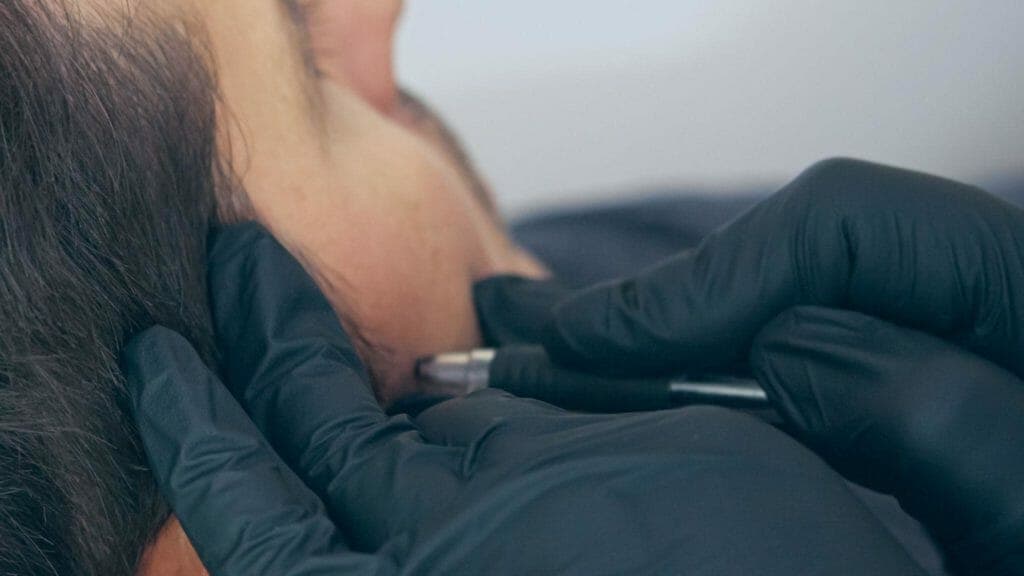
Micropigmentation can describe both optical hair-density work and permanent makeup for facial features, but the designs solve different problems. One places small impressions to suggest follicles; the other creates feature-specific lines, shading, or color.
Hair micropigmentation creates an optical density effect; it does not restore follicles
Hair micropigmentation can reduce the visible contrast of selected thinning or sparse areas by placing pigment marks that relate to nearby hair. It does not grow hair, reactivate follicles, or treat the cause of loss. Medical history and pattern stability matter because new or changing loss may need clinical evaluation and because the pigment design must coexist with future change. Scalp condition, scars, sun, surrounding hair color, and the client's grooming pattern all help determine whether an optical density effect is appropriate.
Permanent makeup designs feature-specific lines, shape, or color
Facial permanent makeup starts from a different design question. Brow procedures may use strokes, shade, or both; permanent eyeliner defines a chosen part of the lash line; lip procedures address color, border, or undertone. The artist plans around facial balance, anatomy, skin, old pigment, and the intended healed finish. Even when eyebrow hair loss is involved, a permanent brow design should not be treated as identical to scalp-density work. The scale, direction, feature shape, and maintenance problem differ.
Microblading is one brow-specific method within permanent makeup. It uses a manual tool to create stroke-like marks in a planned eyebrow shape; it is not another name for scalp or hair-area micropigmentation. Skin condition, natural brow hair, previous pigment, desired softness, and healed retention determine whether microblading, machine shading, a combination approach, or no additional pigment deserves consideration. Review microblading candidacy, mapping, healing, and aftercare rather than choosing it from an oversimplified longevity or comfort claim.
Medical history, existing pigment, and long-term change differ by treatment area
A consultation should begin with the area and visual goal. For hair loss, ask whether the pattern has been evaluated, whether it is stable, and what the pigment can change visually. For permanent makeup, identify the feature and desired no-makeup appearance. In both settings, review healed examples from the relevant treatment area, discuss existing pigment or scars, disclose health and treatment history, and avoid a fixed duration claim. Fresh color and a same-day photograph are not the final result; let the area heal according to written instructions before judging retention, color, or whether refinement is appropriate. The shared medium does not erase the specialized judgment required for each tissue and design.
Plan for how the treatment area may change after pigment
For hair-density work, discuss whether loss is stable, how the client wears the surrounding hair, and what might happen if thinning progresses or the grooming pattern changes. The pigment design has to remain coherent with a future scalp or hairline, not only today's photograph. For facial permanent makeup, consider changes in natural brow hair, eyelid tissue, lip tone, old pigment, makeup preference, and repeated maintenance. These are different kinds of long-term change even though both use implanted color. Ask to see healed work for the relevant body area and learn how the artist evaluates saturation before refreshing it. Medical history also enters differently: changing hair loss may need clinical assessment, while eye, skin, or lip conditions affect feature-specific candidacy. Choosing between the two pathways therefore begins with the tissue and future behavior, not with a generic definition of micropigmentation or a shared machine name.
Continue to Ruth Swissa's hair micropigmentation service for candidacy, optical-density planning, and consultation details.