
Understand the hair-loss pattern first
Hair micropigmentation · Beverly Hills and Calabasas
Create the appearance of density with carefully scaled pigment
Ruth Swissa plans pigment color, mark size, direction, and placement around existing hair and skin to create an optical density effect; the treatment does not regrow hair.
 Hair micropigmentation · Beverly Hills and Calabasas
Deciding on hair micropigmentation
Create the look of density, not new hair
Build density without creating a solid field
Revisit color as hair and pigment change
Scalp and hair evaluation
Plan mark size, direction, and color around remaining hair
Ruth looks at how large your remaining follicles are and which way they grow, then may suggest building coverage across more than one session so the result can be judged before more is added.
Discuss density- 01Understand the hair-loss pattern first
- 02Build density without creating a solid field
- 03Bring scalp, transplant, and treatment history
- 04Revisit color as hair and pigment change
Hair micropigmentation results
Compare density, spacing, and the transition into existing hair
These cases show how small pigment impressions can reduce visible contrast at the scalp. Look at the hairline, the spacing between marks, and how the work meets remaining hair.
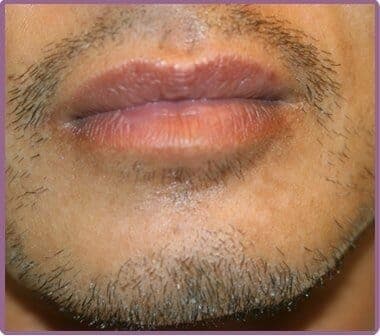
Before treatment · 1 of 6
Understand the hair-loss pattern first
Candidacy depends on the cause and stability of thinning, scalp or skin health, remaining hair, prior procedures, medications, and any medical guidance.
Build density without creating a solid field
Ruth looks at how large your remaining follicles are and which way they grow, then may suggest building coverage across more than one session so the result can be judged before more is added.
Bring scalp, transplant, and treatment history
Report active symptoms, diagnosis, topical or oral medications, prior restoration work, scars, allergies, and changes that may need medical assessment before tattooing.
Revisit color as hair and pigment change
Pigment fades and hair patterns can evolve. Ruth reviews the healed effect and current coverage before discussing maintenance.
Process and results
View the process and multiple client comparisons
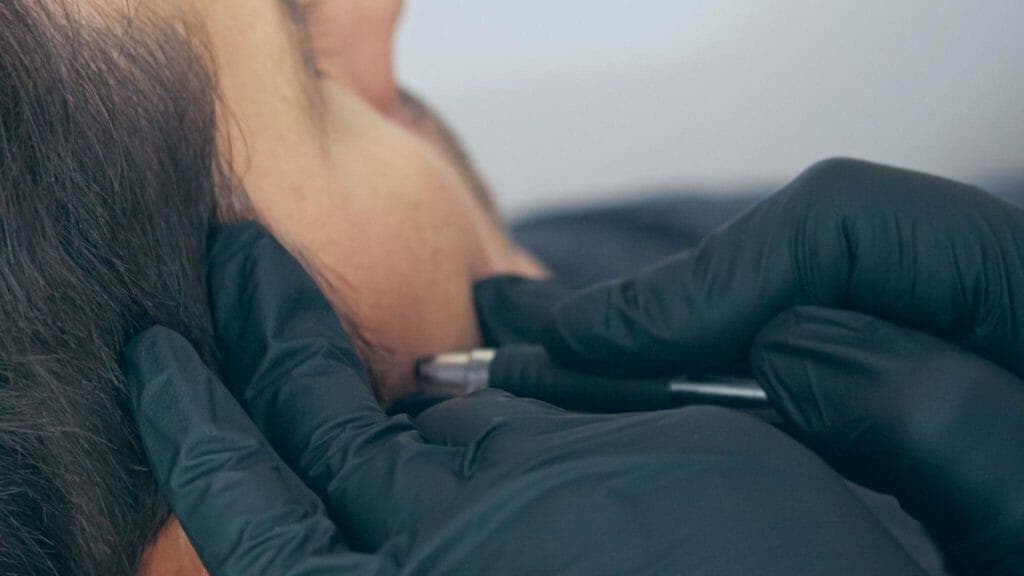
Compare the treatment-room photograph with the before-and-after sets, and notice how density, hairline, and viewing angle differ from one person to the next.
Treatment imagery
More hair-loss options
Compare scalp pigment, alopecia brow work, and medical hair care
How pigment creates the visual impression of hair density
Learn how mark size, spacing, direction, color, remaining hair, scalp or skin, staged application, healing, and fading shape hair micropigmentation.
ExploreThe Same Pigment Medium Can Solve Very Different Design Problems
Compare hair-area micropigmentation and facial permanent makeup by starting tissue, mark pattern, visual goal, medical context, and maintenance.
ExploreHair Micropigmentation
Learn how scalp pigment can create visual density, where its limits begin, and when hair loss needs medical evaluation before cosmetic planning.
ExploreBefore hair micropigmentation
Questions about pattern, hairline, pigment, healing, and upkeep
01What determines whether hair micropigmentation is appropriate for me?+
Candidacy depends on the cause and stability of thinning, scalp or skin health, remaining hair, prior procedures, medications, and any medical guidance.
02What history should I share before hair micropigmentation?+
Report active symptoms, diagnosis, topical or oral medications, prior restoration work, scars, allergies, and changes that may need medical assessment before tattooing.
03When should I assess the change from hair micropigmentation?+
Pigment fades and hair patterns can evolve. Ruth reviews the healed effect and current coverage before discussing maintenance.
Consultation for hair micropigmentation
Bring your hair micropigmentation questions to Ruth Swissa
Ruth Swissa plans pigment color, mark size, direction, and placement around existing hair and skin to create an optical density effect; the treatment does not regrow hair.
Assess density