Why fresh microblading looks darker and sharper than healed strokes
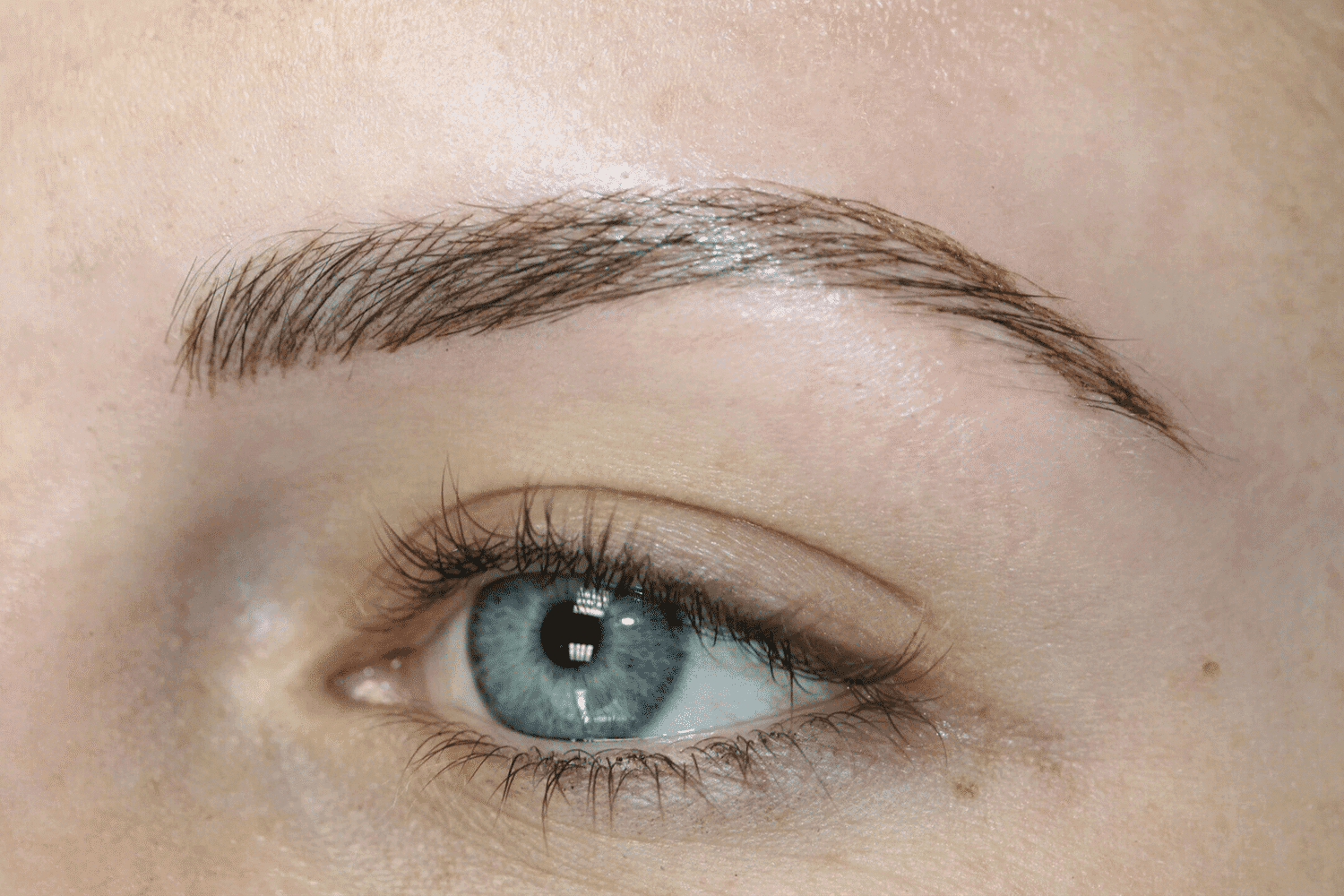
Fresh microblading has more contrast than healed pigment. Individual strokes look darker and sharper, and temporary surface changes can make portions of the brow appear uneven. The appearance immediately after the appointment is therefore a stage, not a reliable preview of the settled result.
Microblading uses a manual tool to create fine marks that are intended to relate to existing brow hair. Once the skin recovers, those marks may look softer and less distinct. The amount of change differs, so no fixed fading percentage should be treated as a personal promise.
Early concern should be measured against the care directions supplied by Ruth, not against an edited result photograph. Picking, rubbing, adding makeup, or applying an unapproved product can interfere with both healing and evaluation. Contact the practice when the appearance or symptoms fall outside what was discussed.
How skin, sun, products, technique, and aftercare affect retention
Retention reflects more than “oily” or “dry” skin. Texture, pore pattern, sensitivity, stroke placement, natural hair, sun exposure, active skincare, facial treatments, aftercare, and earlier pigment can all affect how the brow reads after healing.
Technique matters because very fine strokes are not the right answer for every canvas. When healed marks lose clarity or old pigment already fills the area, shading, combination work, correction, more fading, or no additional treatment may preserve better options. Ruth makes that decision after seeing the skin and existing color.
Share allergies, medication, skin conditions, recent procedures, and active products before the appointment. Preparation instructions should be individualized; do not stop a prescribed medication or adopt another person's product pause without guidance from the appropriate professional.
Assess color, shape, saturation, and skin before refreshing brows
A refresh begins with what remains in the brow. Ruth needs to assess shape, undertone, saturation, stroke clarity, skin condition, and the relationship between pigment and natural hair. A calendar date by itself does not establish that more pigment is useful.
Routine layering can gradually make a brow denser and limit future correction. If the existing shape extends beyond the desired boundary or the color has shifted, another pass of the same technique may hide rather than solve the issue. Waiting, fading, correction, or a different method can be part of an honest recommendation.
Bring dates and photographs from prior work, including removal or correction. Comparable result images should identify technique and healing stage; a nano-brow, powder-brow, or fresh microblading image should not be mislabeled. That context makes maintenance a considered decision instead of a standing appointment.
The mapped outline and color are most visually prominent at the beginning. Judge whether the shape follows the approved design, but allow the expected surface phase to pass before deciding whether one section retained less than another. Ruth should identify the proper review point before you leave.
Sun and skincare decisions continue after healing. Retinoids, acids, peels, lasers, waxing, and facials near the brow may affect timing or long-term appearance. Rather than avoiding every service indefinitely, ask how to coordinate the routine with the treated area.
Cost is clearer when the initial work, planned assessment, and possible future refresh are discussed separately. An advertised package should not commit the skin to more pigment if the healed brow does not need it.
If you are deciding between manual microblading and machine-created strokes, compare the skin and design considerations in the nano brow overview. If pigment is already present, review when it may be more responsible to cover, lighten, remove, wait, or leave the area untreated before booking new brow work.
Bring your present brows, treatment history, and preferred finish to a private brow consultation with Ruth Swissa.