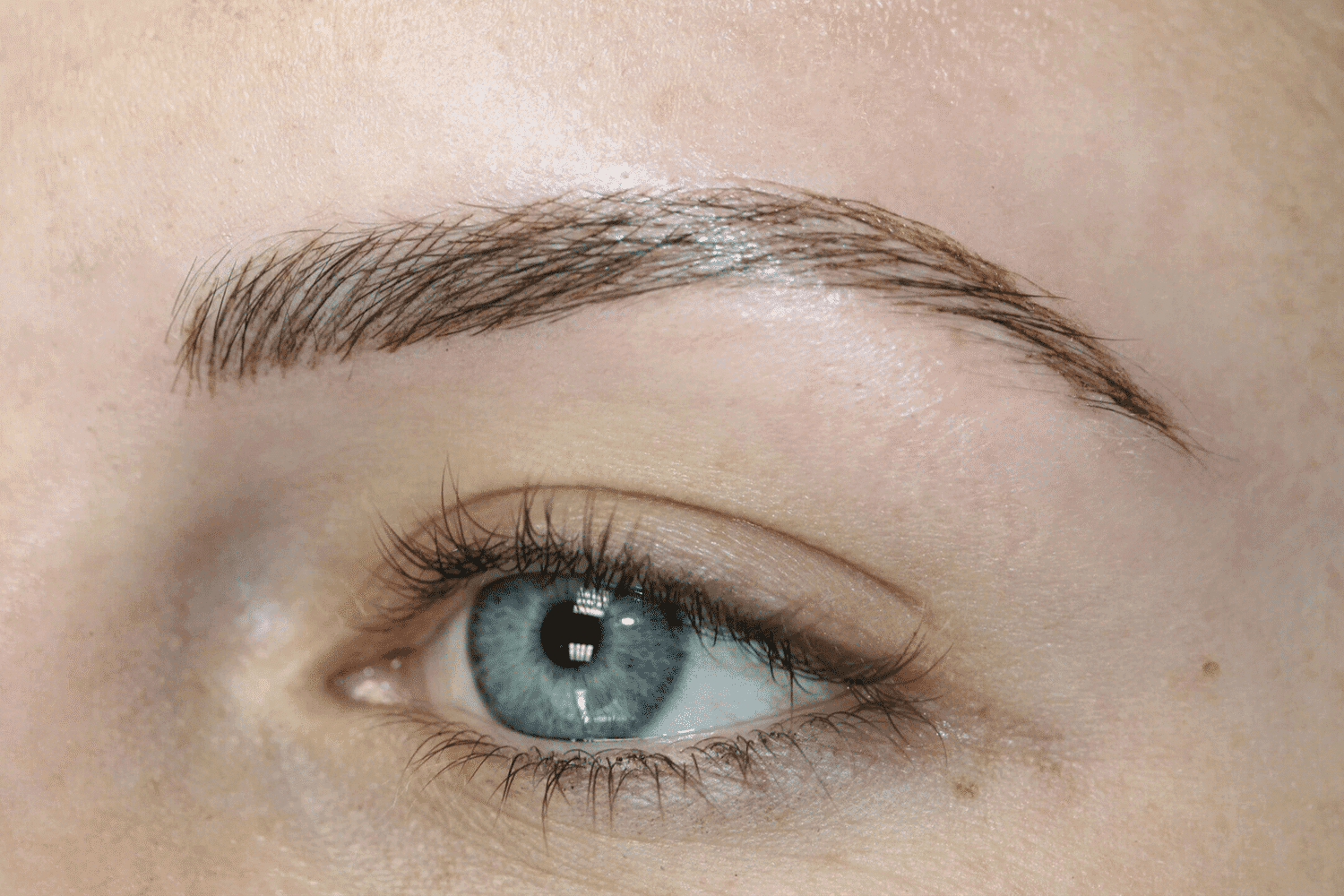
A reminder that a year has passed is not evidence that a microblading refresh is due. Maintenance should begin with the present color, saturation, shape, skin condition, and the client's changing goals—not with an automatic promise to add more pigment.
Assess healed saturation and color before adding more pigment
Look at the brows without pencil and in natural light. Is the pigment still visible and balanced, or has it softened enough that the client genuinely wants more definition? Has the color shifted in a way that calls for assessment rather than another layer of the same formula? Do the old strokes remain distinct, or is the area becoming visually dense? Photographing the brows consistently can help the artist compare change. A calendar can remind a Westlake Village client to review the work, but it should not turn review into an automatic treatment appointment.
Separate a minor fade from a shape or correction problem
Separate fading from a correction problem. A minor loss of intensity may support waiting or a conservative refresh. A shape the client no longer likes, pigment outside the desired map, saturated color, or repeated overlapping strokes may require another strategy. Lightening, removal, shading, a changed map, or leaving the area alone could be discussed. Adding pigment because the brow “looks old” can make future correction more complicated. Ask the artist what specific visual problem the proposed session is intended to solve.
Know when waiting, lightening, or a different technique deserves discussion
Skin and lifestyle may also have changed since the original procedure. New medications, skin treatments, scarring, sensitivity, sun exposure, pregnancy-related changes, health history, or brow styling preferences deserve an updated review. The technique that made sense initially is not automatically the best maintenance method. For a client traveling from Westlake Village, send photographs only as requested and plan an in-person assessment when color or placement cannot be judged remotely. The sound decision may be to do less.
Review the old work before treating fading as a refill
Wash off brow makeup and examine the area in daylight from normal conversational distance. Record where pigment remains strongest, whether the front and tail have faded evenly, whether old strokes are still separated, and whether the color has shifted. Compare those observations with photographs from earlier months using similar lighting. The aim is not to score the result at home; it is to give the artist evidence of change. During review, ask whether more pigment would preserve useful negative space or make the brow too dense. A shape concern may call for different planning than ordinary softening, while an unwanted color or placement problem may require waiting, lightening, or correction. Photographs sent ahead are preliminary context only; the skin and remaining pigment still need to be seen in person before treatment. Maintenance is a design decision about today's brow, not a subscription tied to elapsed months.
Request a current brow assessment through Ruth Swissa's microblading service, which welcomes Westlake Village clients at the Beverly Hills and Calabasas studios.