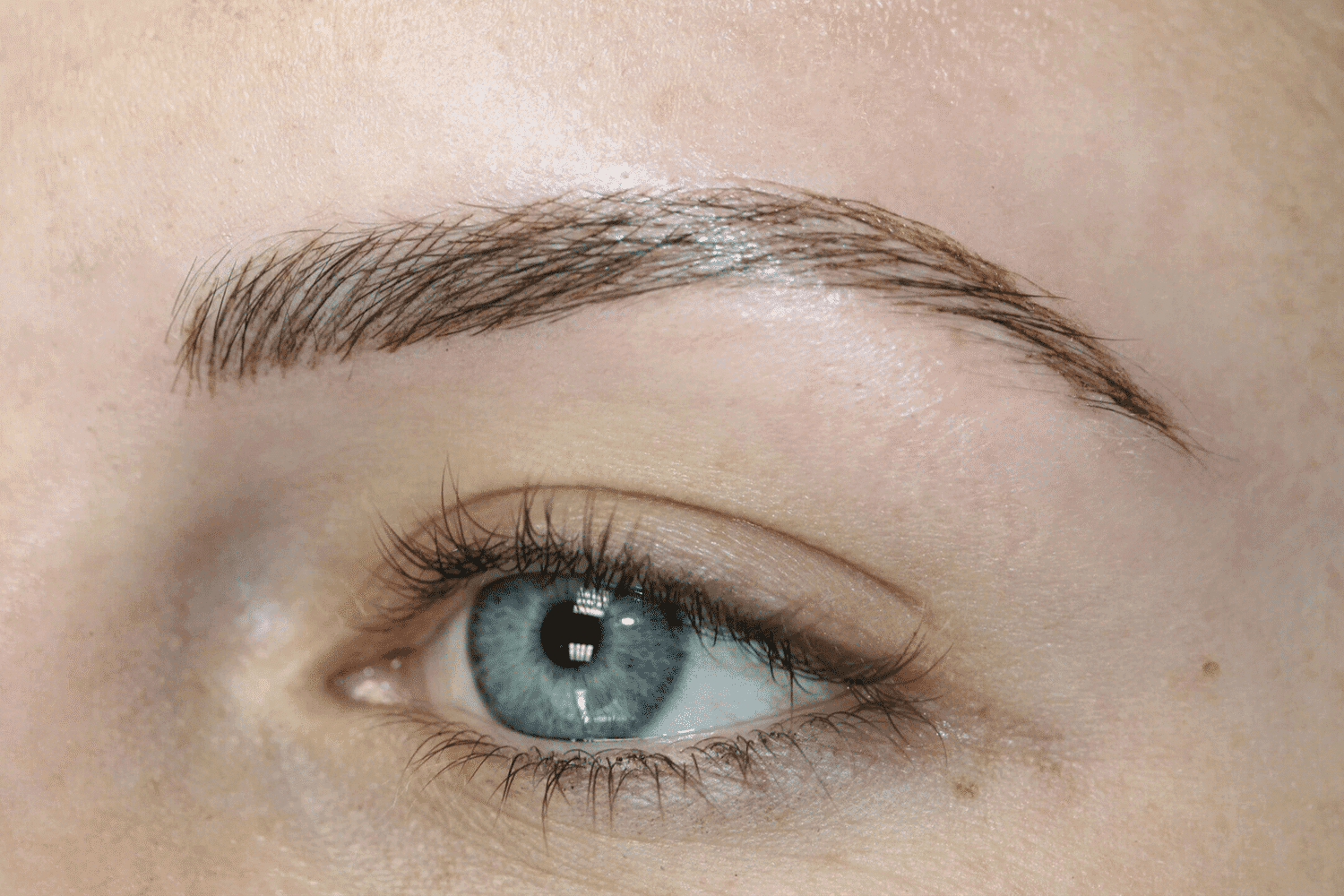
Microblading research gets confusing when tool names and dramatic fresh photographs lead the decision. A better sequence starts with the brow that already exists, moves through the finish the client wants, and ends with evidence of how an artist's work looks after the skin has healed.
First question: will fine strokes suit this skin and existing pigment?
Skin is not a blank sheet. Oil production, visible texture, scar tissue, active irritation, old cosmetic tattooing, and the amount of natural hair can all affect whether very fine strokes remain distinct. Document any previous brow work and removal, list the skin products you use, and bring clear photographs of your untreated brows. None of those details chooses the procedure automatically, but they give the artist a responsible starting point. The useful first question is not “Can I book microblading?” It is “What kind of implanted-pigment pattern can my present skin and brow history reasonably support?”
Second question: do you want strokes, shading, or a combination finish?
“Natural” describes several possible healed finishes. One client may mean individual lines that weave through existing hair. Another may want a soft shadow that replaces daily pencil. A third may need sparse sections supported by both strokes and shading. Looking only at the procedure name hides this design decision. Collect examples for qualities such as softness, density, arch, front-of-brow texture, and overall contrast. During consultation, ask which technique produces that structure on your skin rather than insisting that one popular method is inherently more natural than the others.
Third question: what does the artist's healed work show?
Fresh work is useful for judging mapping and immediate craftsmanship, but it cannot show settled color, retained line quality, or long-term softness. Ask to see healed examples with a starting point relevant to yours and captions that explain timing. Consistency across several cases matters more than one ideal photograph. Also ask how the artist responds when existing pigment is too saturated or poorly placed. An artist's willingness to recommend waiting, lightening, another technique, or no treatment can be as informative as the portfolio itself. Gather that evidence before choosing a consultation.
Build a brow brief before comparing appointment menus
Turn the research into a one-page brief with three columns: what is present now, what you hope to see after healing, and what remains uncertain. Under the first column, record natural hair density, visible texture, old pigment, scars, and current products. Under the second, describe softness, density, front shape, arch, tail, and how much pencil you expect to keep using. In the last column, list the portfolio evidence you still need to see. This format helps the consultation stay focused on design and candidacy instead of drifting through technique names. It also makes conflicting preferences visible. A person may save delicate stroke references while asking for the coverage of a powder finish; naming both needs gives the artist a chance to explain the tradeoff. Keep the brief descriptive rather than prescriptive, because the in-person view may change which application method can support the intended healed structure.
When those three questions are clear, bring your brow brief to a microblading consultation with Ruth Swissa.