“Nano” describes a machine-based application approach, not a guarantee of naturalness, comfort, retention, or a fixed period of wear. Microblading uses a manual tool. Both are forms of cosmetic tattooing, and both should be chosen by how the complete brow is expected to heal in your skin.
Reducing the time spent drawing a brow each morning can be a reasonable goal, but permanent makeup does not promise a maintenance-free face or an identical brow every day. Natural hair continues to grow and may still need ordinary grooming. Pigment also changes with healing and time, so the decision begins with your present brows rather than a trend label.
Machine nano strokes and manual microblading use different application methods
Nano-brow work generally uses a powered cosmetic-tattoo machine to create fine stroke-like marks, while microblading uses a manual tool. The hand movement and application differ, but either method must create a pattern that makes sense beside the natural hair and across the full mapped shape. A smaller-sounding name does not make a procedure safer or universally better.
Ask Ruth Swissa to identify the proposed method, explain why it fits your skin and design goal, and show complete healed brows made with that approach. Tool choice should follow the intended structure: softness through the front, believable direction through the body, enough definition in sparse zones, and a tail that fits the face. Shading or a combination may produce a more coherent result when isolated strokes are unlikely to read clearly.
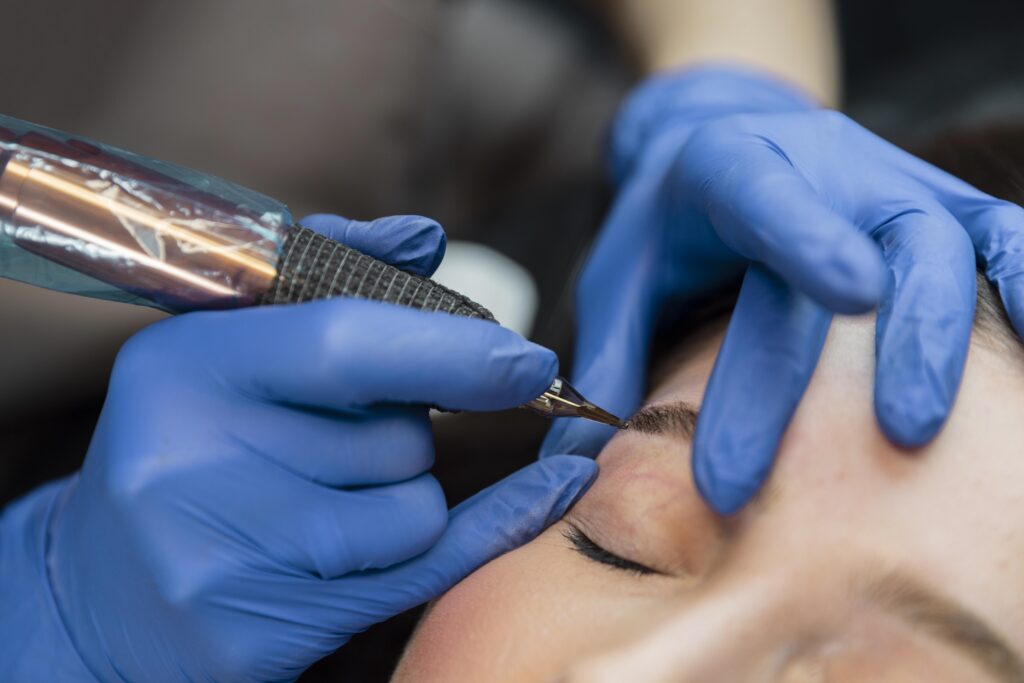
Whichever method is discussed, ask which needle or blade configuration is used, which items are single-use, how barriers and work surfaces are changed between clients, and what written preparation and aftercare you will receive. A photograph of a machine near an eyebrow cannot answer those provider-specific safety questions.
Skin, old pigment, and natural hair matter more than the trend label
Skin behavior, old pigment, scars, oil production, natural hair direction, current density, and the desired finish affect whether stroke work is suitable at all. Fine lines can blur into an existing tattoo or compete with dense natural growth. In some brows, a soft shaded field or combination design may create a more coherent result than isolated strokes.
Nano brows do not require removal of your natural eyebrow. Ruth maps pigment around the hair pattern and discusses any ordinary shaping separately. Bring the brows as you normally wear them when possible, plus photographs of earlier pigment before it faded. Existing dark, cool, misplaced, or saturated work may make correction, lightening, waiting, or a shaded approach more appropriate than adding new fine lines.
Tell Ruth about skin sensitivities, prior reactions, scars through the brow, prescriptions and products that affect the skin, recent peels or procedures, and healing problems after earlier tattooing. Do not stop medication or change medical care for an elective brow appointment unless the clinician who manages it directs you. An active infection, open skin, unexplained hair loss, or a new or changing skin finding needs appropriate assessment before cosmetic tattooing.
Compare healed stroke clarity, softness, and maintenance expectations
New strokes can look darker and sharper before they soften. The surrounding skin may also look temporarily red or feel tender. Sensation, appointment length, visible recovery, and retention vary with the person and the work performed. Ask what Ruth expects for your plan, whether a topical product is used, and how to report an unexpected reaction rather than relying on a promise that treatment will be painless.
Follow the written directions provided for cleansing, moisture, water, sweat, cosmetics, sun, picking, and products near the brows. Do not assume every client should keep the area dry for a week, apply an unspecified gel, or take an over-the-counter pain medicine. Ruth's instructions control cosmetic-tattoo care, and medication questions belong with a qualified clinician or pharmacist who knows your health history.
Retention varies, and lines may not remain equally distinct across the entire brow. Ask when the skin is ready for a useful healed review and how maintenance is assessed without a promised one-to-three-year lifespan or an automatic six-month touch-up. Adding pigment before Ruth can judge the settled pattern can create excess density and make later correction more difficult.
Ask to compare healed strokes on equivalent starting brows
Request nano and manual microblading examples with similar natural-hair density, visible skin texture, and old-pigment status. Check whether captions identify the healing stage, session count, technique, and use of makeup. Then compare what matters at conversational distance: softness through the front, integration with hair direction, clarity in sparse zones, symmetry that still fits the face, and the overall amount of definition.
A macro photograph of one fine line does not establish how the full brow will settle. Ask which aspect of your skin or design goal makes one application method preferable and what would lead Ruth to recommend shading, a combination, correction, more time, or no new pigment. The answer should connect the tool to a complete healed structure rather than novelty.
For Los Angeles-area clients, Ruth offers brow consultations in Beverly Hills and Calabasas; choose the location and timing that fit your follow-up. Start with Beverly Hills brow candidacy and consultation details, or review the Calabasas location when that is the better appointment choice. Bring your present brows, prior-pigment history, daily routine, healing questions, and examples of the healed finish you prefer.