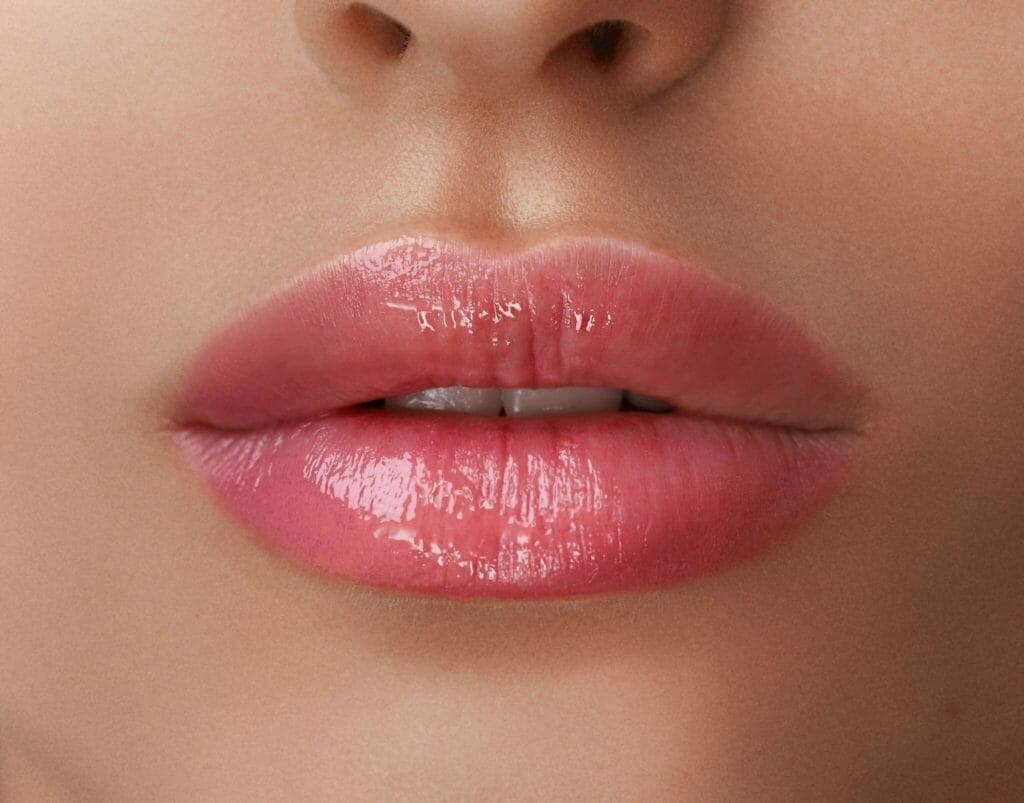
Lip-blush portfolios often mix immediate photographs with fully healed results. Both can be useful, but they answer different questions. If you are comparing Los Angeles artists, know which stage is shown before treating the image as evidence of color, border softness, or retention.
Why immediate color and swelling can distort expectations
A fresh photograph can show the approved map, immediate placement, and the condition of the lips at the end of an appointment. It may also show swelling, surface shine, redness, and pigment that is far stronger or warmer than the intended healed direction. Lighting and close-up lenses can amplify those effects. Fresh photographs therefore should not be used to promise the final shade or shape. A helpful caption says that the image is immediate and explains why the appearance will change rather than presenting drama as the result.
What healed photographs reveal about tone, border, and evenness
Healed photographs offer a different kind of evidence. They can show whether the border settled softly, whether color appears even, how natural creases remain visible, and how the chosen pigment relates to the client's starting tone. Timing still matters: “healed” should identify when the image was recorded, especially if it follows more than one session. Look for consistent lighting, several cases, and starting points relevant to yours. One ideal image cannot predict how another person's lips will retain pigment.
Ask whether images show comparable starting pigmentation and timing
Ask for context that photographs cannot supply on their own. Did the client begin with previous tattooing, strong natural pigmentation, scars, or recent filler? Was the goal a sheer blush, neutralization, border refinement, or fuller permanent color? Did the case require staged sessions? Has the client authorized public use of the image? These questions turn a gallery into a decision tool. Authentic result review should support a consultation, not replace a discussion of candidacy, healing, and the limits of color prediction.
Read a result set as a sequence, not a highlight reel
Select three portfolio cases and build a small evidence card for each. Record the untreated starting tone, the stated goal, whether the image is immediate or healed, the time since treatment, and the number of sessions represented. Note lighting, lip position, gloss, swelling, and whether the border remains visible without heavy editing. If any field is unknown, ask rather than filling it with an assumption. Then compare the cases for consistent qualities such as softness at the edge, evenness through natural creases, and a color direction that respects different starting tones. This approach prevents one dramatic fresh photograph from carrying the entire decision. It also reveals whether the portfolio includes people whose baseline resembles yours. Result images can demonstrate an artist's range and documentation habits, but candidacy still depends on health history, previous pigment, tissue condition, and an in-person color discussion. Use photographs to sharpen your questions, not to request an exact copy of someone else's lips.
See how Ruth Swissa approaches lip blushing, with results shown alongside their stage and timing.