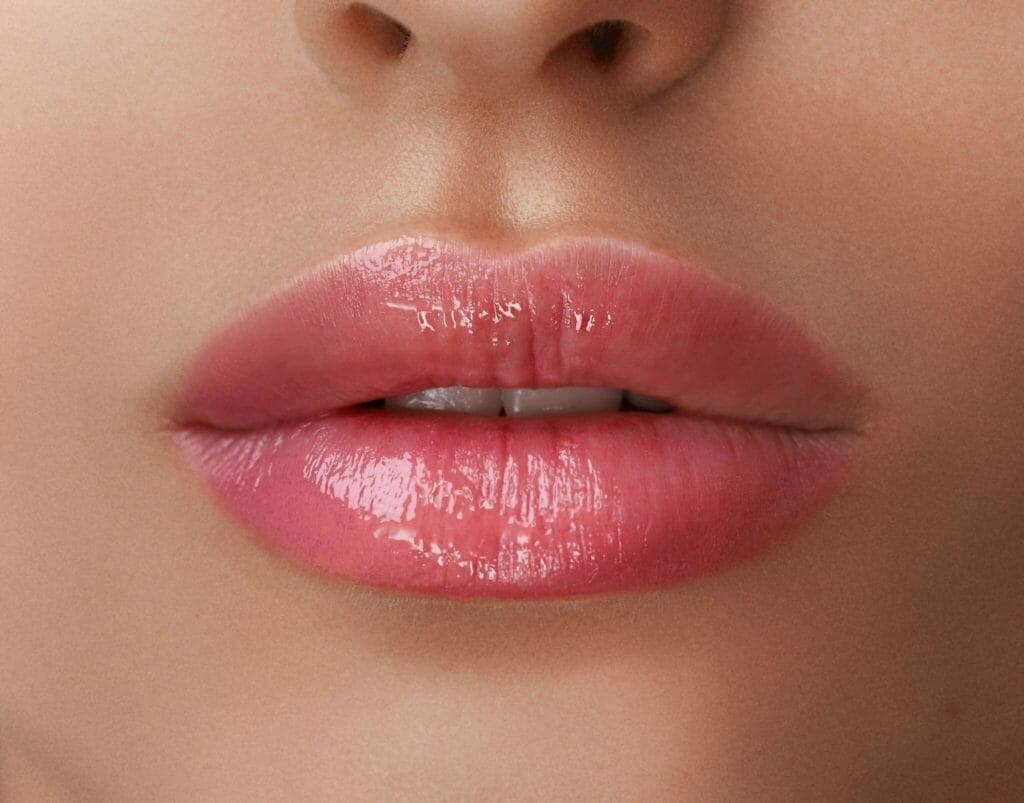
Expect a visual transition from fresh pigment to settled color
Lip blush is planned around the relationship between applied pigment and your natural lip, but that relationship cannot be judged from the first mirror check. Fresh color sits alongside temporary surface changes and can appear more intense or sharply defined than it will later. As the lips recover, the apparent tone, border, and evenness may shift before the color is ready to assess.
Use photographs only when their timing is clear. An image taken immediately after treatment documents fresh work; it does not show the healed color. A photograph labeled with a genuine healed interval is more useful for comparing softness, border placement, and the relationship between pigment and natural lip tone. Lighting, angle, editing, and individual biology still matter, so another person's result remains a reference rather than a forecast.
Healing and retention vary, so do not apply a fixed color-loss percentage or someone else's product schedule to your lips. Follow Ruth Swissa's written directions for your appointment: which product to use, how much and how often, how to cleanse, what to keep away from the lips, and which activities to limit. If the early appearance differs from what you expected, contact the practice before adding a product, exfoliating, picking, or trying to correct the color yourself.
Keep makeup, skin-care actives, and unapproved products away from fresh pigment for the interval Ruth provides. Avoid rubbing, peeling, or removing surface flaking. If a written instruction is unclear or a product causes irritation, pause and contact the practice for individualized direction rather than improvising a substitute.
Share cold-sore, filler, pigment, and reaction history before treatment
Tell the Ruth Swissa team about previous lip tattooing, neutralization or correction, filler, reactions to cosmetics or topical products, current irritation, and any recent procedure around the mouth. Bring a medication list when requested, but do not stop, alter, or add a prescribed medicine for a cosmetic appointment unless the prescribing clinician directs you to do so.
A history of cold sores is especially important to disclose because lip procedures can be relevant to recurrence planning. Ruth can explain why the history matters, while prescription choice, dose, suitability, and timing belong with the clinician who can evaluate and prescribe for you. Do not rely on a generic online antiviral schedule.
Recent or planned lip filler also affects timing. Lip blush adds pigment; filler changes physical volume. Tell both qualified providers what has been done and what is planned, then follow the interval they approve for your circumstances. Do not schedule the procedures close together based only on a social-media timeline or another client's experience.
Color preferences also benefit from context. Bring references that show qualities you like—muted versus bright, warmer versus cooler, softly defined versus more visible—without expecting an exact copy. Existing lip tone, border, symmetry, and previous pigment affect what can be planned. If you have an important event, share the date so the consultation can address the visible early phase instead of assuming the lips will look settled on demand.
Active sores, cracks, unexplained swelling, infection, or another unresolved lip condition should be addressed before tattooing. Ruth's role is to assess permanent-makeup candidacy and color planning, not diagnose a medical problem. Seek the appropriate clinician when the concern falls outside cosmetic tattooing.
Review retention only after the recommended healing interval
A useful color review begins after the pigment has had enough time to settle, not while the lips are still moving through the early stages of recovery. Ruth Swissa will identify the appropriate review point for your procedure and history. Before that point, daily comparisons can create more anxiety than useful information, particularly when photographs use different light or angles.
At the review, compare the healed result with the original plan. Consider overall tone, how the border relates to natural lip tissue, and whether any area appears to have retained differently. The next step may be to wait, leave the result as it is, or discuss refinement. A follow-up is not an automatic promise that additional pigment should be placed.
Keep expectations specific. Lip blush may add a softly tinted appearance or refine visible definition, but it does not change physical volume and should not be planned as if it were filler. Color also lives with changing skin, sun exposure, products, and time. Permanent intensity, identical healing, and exact replication of a reference color cannot be promised.
For routine questions about the chosen pigment, normal appearance described in your instructions, or an aftercare step, contact Ruth Swissa and describe what changed, when it began, and what you have applied. Photographs in consistent light may help the practice understand the question, but they do not replace medical assessment.
Increasing pain, spreading redness, pus or drainage, fever, breathing difficulty, severe swelling, eye or facial involvement, or symptoms beyond what your instructions describe need prompt medical attention. Contact emergency services for an emergency. The artist can answer cosmetic-treatment questions, while a qualified medical professional evaluates and treats medical symptoms.
If you are deciding whether to proceed, compare lip-blush candidacy and color planning with Ruth Swissa. If you are already healing and need help with your appointment instructions, contact the Ruth Swissa team with the treatment date and your specific question.