Start with natural tone, undertone, lip health, and prior pigment
Two people can ask for the same shade and need different pigment, because the color underneath is not the same. Asymmetry, a soft or sharply drawn border, tissue condition, and pigment left from earlier work all change how an implanted color reads. A request for a sheer wash differs from stronger saturation or corrective work.
Color references are useful when they communicate qualities such as muted, warm, cool, soft, or defined. They cannot predict how the same formula will heal on a different natural lip tone. Ruth selects a pigment family in relation to the starting color and the intended healed visibility.
Active irritation, unexplained lesions, scar tissue, allergies, medication, and earlier tattooing can change candidacy or timing. Filler history also matters because swelling and changed contour can affect design decisions. A consultation should separate lip color from the volume concerns filler is intended to address.
Why swelling and stronger first-day color change the apparent shape
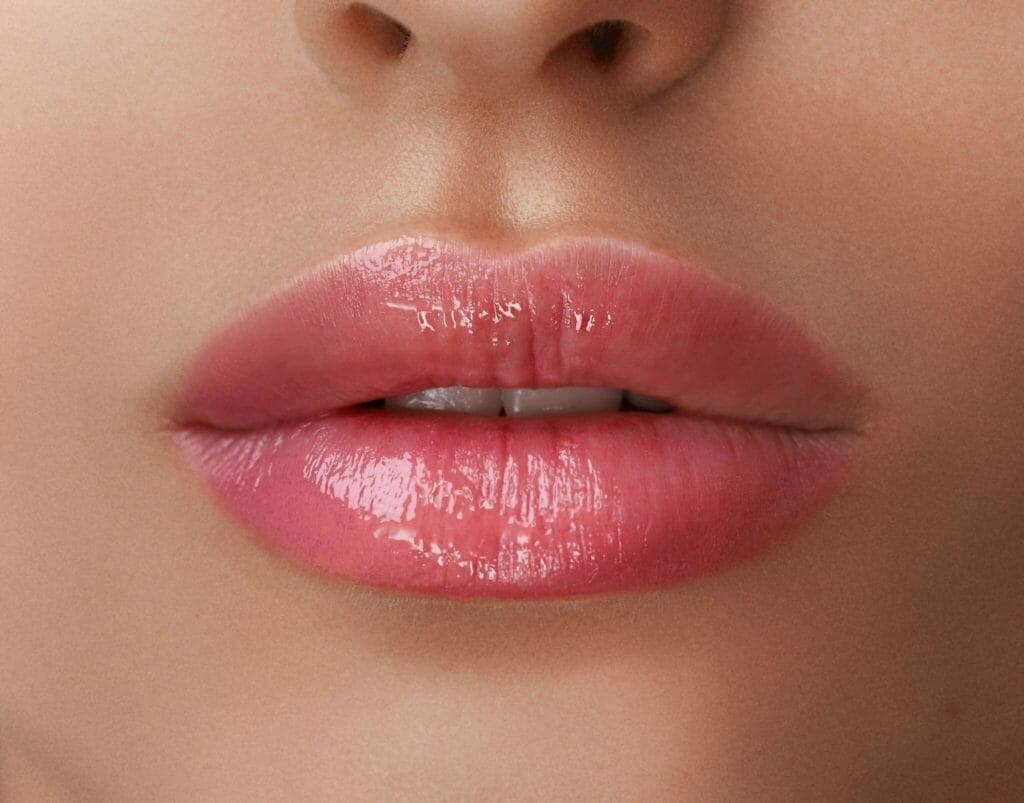
Fresh lip pigment usually has more contrast than the settled result, while temporary swelling can make the border appear different. Surface recovery may cause dryness or uneven-looking color. Those stages make an immediate photograph a poor prediction of the settled color.
An exact percentage of color change or universal healing schedule cannot be promised for every person. Tissue, undertone, pigment, technique, and aftercare influence the appearance. Ruth should provide the care instructions and the point at which she expects the result to be evaluated.
Do not try to correct an early impression with unapproved products, picking, or additional pigment. If color, swelling, or another symptom differs from the supplied instructions, contact the practice. Medical concerns require the appropriate level of care rather than routine cosmetic reassurance.
Discuss cold sores, filler timing, and healed retention before refinement
A history of cold sores belongs in the consultation. Antiviral decisions require guidance from an appropriate medical professional and should not be replaced by a general online schedule. Disclose allergies, prescriptions, current lip products, filler timing, and prior reactions as well.
Refinement should respond to healed color, not to a package or an automatic touch-up date. The settled lip may reveal areas that retained differently, a border decision that needs review, or a result that does not need more pigment. Waiting can be an active part of a responsible plan.
Before-and-after pairs should show the same person, in order, with the healed interval stated and the client's permission. Fresh swelling must not be presented as added volume, and a filtered image should not stand in for accurate color. Comparable evidence includes the starting undertone and the actual stage shown.
The border deserves a separate discussion. Softening a blurred edge, balancing selected asymmetry, and drawing beyond natural lip tissue are not equivalent requests. Ruth should show the proposed boundary and discuss how it will relate to the face after temporary swelling has resolved.
Daily movement also makes lips different from brows or eyeliner. Speaking, eating, drinking, and applying products affect the area throughout recovery, which is why lip-specific written directions matter. Instructions from another permanent-makeup procedure should not be substituted.
Maintenance remains individual. Sun, products, natural tone, technique, lifestyle, and previous work influence how color changes over time. A refresh begins with an assessment rather than a promise that every person returns on the same interval. To discuss palette, history, and the desired healed finish, explore lip blush consultations.